
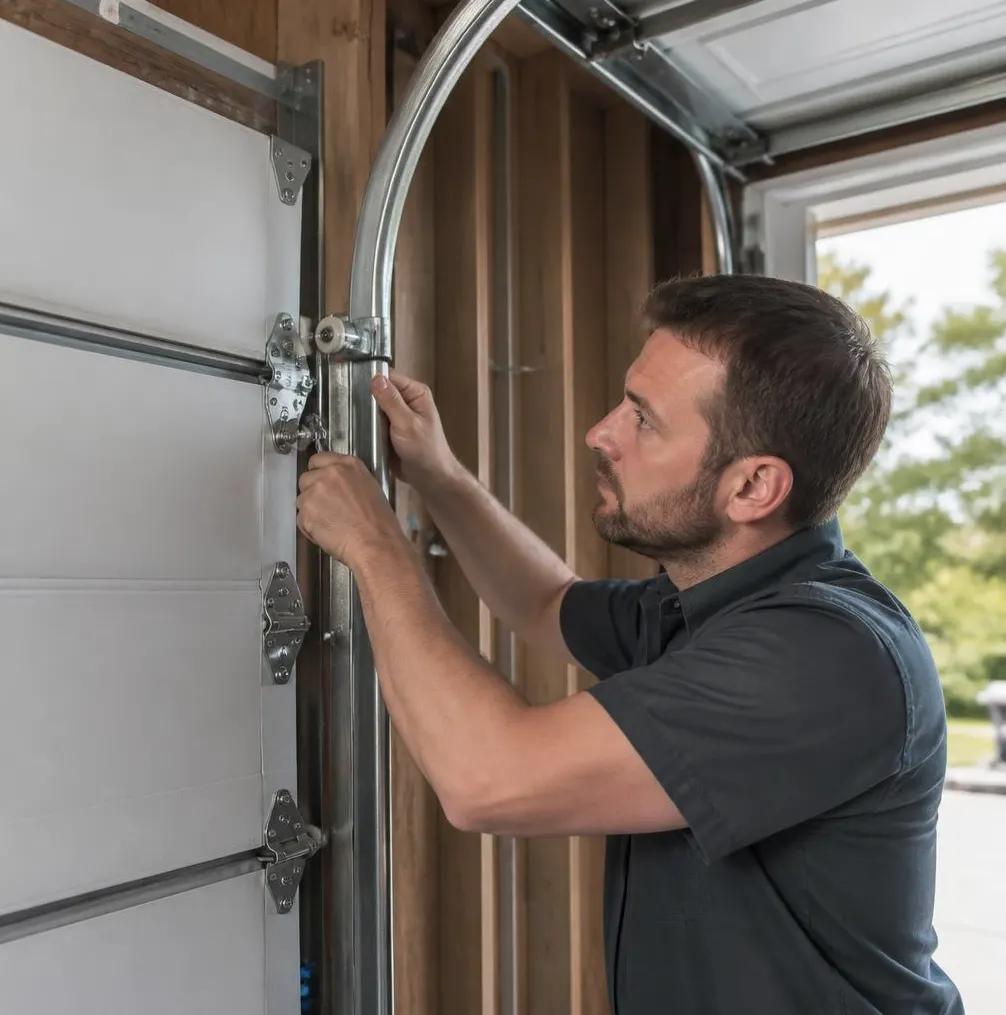
Rule of thumb: if you can do it with a wrench and a rag, it's safe for a homeowner; if it involves the springs or cables, it's not. The exceptions go both ways — even simple hardware checks should stop if a bolt is rusted solid or a bracket is bent, and even spring work can wait a day if the door still opens and closes safely in the meantime. This routine takes about twenty minutes and is worth doing now, before the wet season turns summer's dust and sand buildup into grime that jams rollers and tracks.
Tools You'll Need
- Work gloves and a flashlight
- Adjustable wrench or socket set
- Silicone-based garage door lubricant (not WD-40, which attracts dust)
- Clean rags
- A stepladder
- A 2x4 or a rolled-up towel for the safety reverse test
The Twenty-Minute Routine
- Look over the tracks. Months of dry heat and dust storms leave a fine grit coating inside the vertical and horizontal tracks. Wipe them out with a dry rag and check for dents or spots where the track has pulled away from the wall bracket.
- Tighten the visible hardware. Go panel by panel and snug up the bolts on the hinges, roller brackets, and the track mounting bolts. Garage doors flex every time they open, and bolts work loose over a season. Do not touch anything connected to the torsion spring assembly above the door.
- Lubricate the moving metal parts. A light coat of silicone lubricant on the rollers, hinges, and the spring coils (just a quick spray, not a soak) keeps things quiet and prevents the squeal that shows up when dust mixes with old grease. Skip the tracks themselves — lubricant there just collects more grit.
- Test the auto-reverse safety feature. Place the 2x4 or rolled towel flat on the ground where the door closes, then run the closing cycle from the wall button. The door should touch the object and reverse immediately. If it doesn't, stop using the opener until a technician adjusts the force settings.
- Check the photo-eye sensors. These are the two small sensor eyes a few inches off the ground on either side of the door. Wipe the lenses clean — dust accumulation from a dry summer is the most common reason these start misreading — and make sure both are pointed at each other, not knocked out of alignment.
- Run the manual balance test. Pull the emergency release cord to disconnect the opener, then lift the door by hand to about waist height and let go. A properly balanced door stays put. If it drifts up, slams down, or feels unusually heavy, the spring tension is off — this is a job for a technician, not a DIY adjustment.
- Inspect the weatherstripping. Check the rubber seal along the bottom of the door and the vinyl strips along the sides. Cracked or flattened weatherstripping lets in wind-driven rain once the winter storms arrive, along with dust and drafts the rest of the year. Replacing it is a simple DIY swap if it's just worn, not torn or missing hardware.
- Look at the cables. Without touching them, shine the flashlight on the lift cables near the bottom brackets. Frayed strands, rust, or visible kinks mean the cable is close to failing and should be replaced before it snaps under tension.
Where the Line Is
Everything above uses hand tools and stays away from parts under spring tension. The moment you see a stretched or rusted spring, a frayed cable, a door that won't balance, or an opener that won't reverse safely, stop and call a technician. Torsion springs in particular store enough energy to cause serious injury if handled without the right bars and clamps — this is true regardless of how simple the fix looks.
When to Call Victorville Garage Door
If your balance test fails, the auto-reverse doesn't work, or you spot cable damage, it's time to call in a professional. Our Garage Door Maintenance service covers a full tune-up — spring tension checks, track alignment, hardware torque, and opener calibration — using the right tools for the parts you shouldn't touch yourself. If the springs themselves are worn or stretched, our Spring Replacement service gets them swapped out and balanced correctly, so the door isn't putting extra strain on the opener motor all winter.
If you're in Victorville, Hesperia, Apple Valley, Adelanto, Oro Grande, Lucerne Valley, Phelan, or Spring Valley Lake and want a second set of eyes on your garage door before the rain starts, give Victorville Garage Door a call — we'll get it running smoothly and keep it that way.